8/1/13

Family Summer Activity


Summer, so far, has been busy, hectic (hence not much blogging) and especially hot...hot... hot!  Now the weather aficionados are saying this is Utah's hottest year  on record.  Wow!  Fortunately Utah also is blessed with a  great outdoors - canyons, mountains, lakes, rivers, trails, etc.  So much so that the governor has formed the new Office of Outdoor Recreation - a first of its kind in the country.  Coincidentally, our family, during the past weekend, decided to take advantage of nature's offerings in our state's backyard for some fun activities, and to fend off the heat.  So we went camping and then boating.  It was also our annual family camp.  Here are some pictures from our recreational fun this past weekend - here's to the good times!! ....


... heading to camp


... playing rummy and suipi


... campsite fire - s'mores and marshmallow time
  

... following morning after breakfast, ready for the lake


... a river near the camp


... driving towards the lake (about 5 miles)


... the lake, still early morning


... the convoy arrives


... tents pitched and the army is dispersed


... e fia skipper si mea ... koe fia maua a lo'u paopao


...  koe faamagaku le ka'ele i le sami a dearie

... watching the fautasi race ...hahahaaa


... na ua motu mai nei i luma le segavao


... and now the segavao rowers are tired - mamao kele le kigi


our real skipper ... boat bound for Apolima


... fun! fun! fun!!


... are we having fun yet?


... yes! .. this is fun!


.... slow down, aua le so'oga faia - skipper never skips a break ...lol!


... girls just wanna have fun


Baywatch impression? ...LOL! ... kama kuai o le beach a LA (Lalomanu Aleipata, that is)
  
FAMILY ...is everything!!
At the end of our fun-filled lake activity, we posed one more time for a family picture (missing The Elder) ... and for the memories.  Faafetai (thanks) to our children, daughters and their families, especially our oldest and her husband for planning the activities!

7/2/13

Response to "Threats to the Samoan Language."

A discussion – via letters (three) to the Editor of the Samoa Observer –  of threats to the Samoan language, has prompted my response (below).  Among some of the points raised by the “threats” author were that the Samoan language should be “untainted, vivacious and potent,”  the need for the church to be responsible for perpetuating and reviving the language as well as blaming the English language as “the most detrimental influence” on the existence and survival of the Samoan language.
________________________________________

Languages that do not change, die

Dear Editor:

I have been reading - with a bit of uneasiness - Mr. Ivara’s three-part (so far) discussion of the threats to the Samoan language.  I fully understand his points though I do not necessarily agree with his somewhat extreme and tenacious approach, suggestions and faultfinding.  Like Mr. Ivara, I do not want to see the Samoan language extinct or become obsolete.  I am therefore in favor of smart and strategic intervention and programs to reinforce the viability, practicality and use of the Samoan language.

Condemning the English language as the “most detrimental influence to the existence and stability of the Samoan language,” is neither constructive nor resourceful. It may be a fact, but it’s useless in the context of our aspirations to preserve and perpetuate the Samoan language.  Moreover, that’s quite harsh to beshrew something that we, as a people, have adopted more by choice and necessity than by imposition or mandate.  The irony, however, is that Mr. Ivara has contempt for the English language and yet he used it “extensively” and almost exclusively in his letters.  He may have done that to reach his intended audience of Samoans who write and speak English (like him?), yet still, there is something insincere, if not insidious in using English to brand English.  It reminds me of one travesty about swearing among the Samoans.  E palauvale loa se kamaikiiki, faapea loa le koea’iga, “Sole, soia e ke palauvale lou [bleep].”  Ioe ua faaaoga le upusa e kaofi ai le upusa.  (Basically using profanity to berate swearing.)

Furthermore, Mr. Ivara faults the English language for the deterioration of the Samoan language and then in the same breath, he lauds the efforts of the missionaries and other foreigners who used English grammar rules to analyze, construct and explain Samoan grammar.  That service has obviously, and ironically, led to a better understanding of the Samoan language that people like Mr. Ivara have displayed and demonstrated.

The intent of this letter is not to favor English over Samoan; rather it is to propose that the two can and should co-exist.  There are concepts, notions, items, beliefs, etc. that are inherent and/or common among our people that are not fully understood and/or explained using the Samoan language, only with English.  English is also the universal language for business, technology, government, etc., and so we should not be naive in its denigration.

Language is part of the social paradigm and therefore changes with time.  Generally, anything that resists change is likely to be exterminated. Organisms have to adapt to a new environment or suffer extinction. Such is true with language which needs to “socialize” and consociate for survival. This principle is perhaps more applicable in today’s fast-paced world in which change and/or adaptation are necessary for endurance, permanence and longevity.  So along with our native desires and nationalistic attitudes about preserving our Samoan language, we should also allow it to change and adapt where necessary and needed - syntax, semantics, vocabulary, etc.  With language, change is not only necessary but inevitable.

The English language itself has gone through phases and periods of change. There’s the Old English, Middle English and Modern English. Writings, like Beowulf, from the Old English period are hardly intelligible to modern English speakers.  The changes and adaptability of English - oftentimes borrowing from other languages - have led to its durability.
The Samoan language also needs to change and adapt otherwise it will suffer untimely death or rapid extinction.  For the seeming hardcore approach Mr Ivara has towards preserving the Samoan language, keeping it “untainted, vivacious and potent,” -  including his quandary with English - perhaps the only way to achieve such objective is for the native Samoan community to stay isolated and closed to the outside world. We know that is impossible.  Considering today’s global society and its nascent homogeny, hastened by technological advances, insularity and isolationism would only spell genocide and linguicide.

In support of Mr. Ivara, however, I, too, was disappointed with the changes made in the seventies notably the elimination of the diacritics (macron, apostrophe, glottal stop/break, etc.,). Native speakers had fewer problems with contextual reading and pronunciation.  On the other hand, second-language speakers, like children of Samoan immigrants (NZ, US, Australia, etc.) have a hard time learning proper pronunciation, hence the language, without the diacritics.  These Samoans living abroad have a significant role to play in perpetuating and preserving the language and it’s important that they are taught the correct methods, skills, properties and elements of their native language.

And so in our efforts to preserve the Samoan language, we should not do it independent - or at the expense - of the English language, or any other language for that matter.  Remember that  Greek, also, through the Bible (NT), has given us the word “areto” (artos) - and others - which has become an important word in our spiritual parlance.  “Falaoa” just does not capture the essence, depth and nuance of “bread” as it relates symbolically to Christ.

Ma le fa’aaloalo lava,
LV  Letalu


Homecoming Fiafia (Party)

Sis. Letalu's homecoming fiafia was something that we as a family did as a gesture of appreciation for her mission and service among the people of Montana, and for having served faithfully and honorably.  Through some good and kind friends and acquaintances we were able to secure, again,  the same Golf Clubhouse (near our home) where her farewell party was held, for her homecoming party too.  And with the company of  close friends and families to celebrate her return (RWH), the fiafia - food, entertainment, sociability, etc. - was enjoyed by all.  Thank you to all who made our missionary's fiafia possible and enjoyable.  Some pictures from the party ...


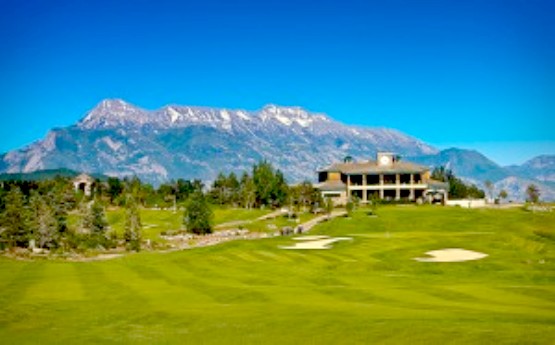
the clubhouse


another view of the clubhouse


the "great room" where the fiafia was held
("With its vaulted ceilings, stone fireplace and French doors opening onto a balcony overlooking the Golf Course, the Great Room offers a refined, elegant atmosphere.")


aunties  (l to r - isa, bev, 'ula and lavinia)


friends


nieces (l to r: kora, eden and neyah)


uncles sa'ili (left) and papali'i jr.


the mom


sis. letalu with her sisters and mom


 the puletasis were sewed by the mom and everyone designed and painted her own.
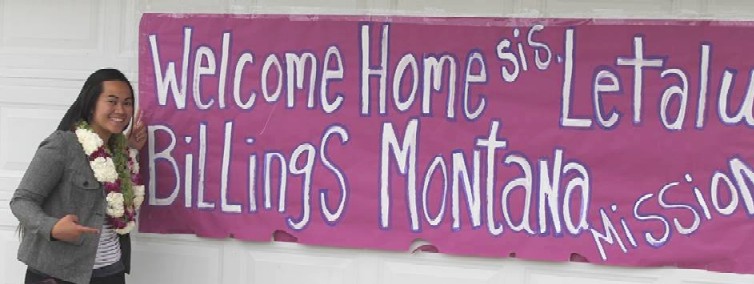
mission sign was a family creation too.

zita and dawn


nephews during the entertainment


with cousins and sisters

zita: "faafetai tele to you all - our families, friends, acquaintances, etc. - for your love and support!  God bless!"

6/19/13

Samoan movies are like “Soaps”

....whaaat?

It’s no secret that the Samoan movies (ones made/produced by Samoans with Samoan themes, language, characters, etc.), despite their relatively recent nascency, are quite popular with - and affecting many - Samoans both at home and abroad.

Similarly, the US television soap operas (or “Soaps”) --  that seem to continue revolving as the world turns affecting all my children, and yours - both young and restless - in all the days of their lives, with no guiding light and then sometimes ending up at the general hospital --  have drugged and affected many desperate housewives.

Ironically there is almost nothing “clean” about these soaps. In fact I always refer to them as serial scabrous slime (sorry soap fans).

But that’s not the reason for my comparing Samoan movies to US soaps. Far from it. Considering the moral psyche and pietism of the Samoans, I doubt the “soapy” content will fly with these noble savages...yet.  The serial method, however is evident in the Samoan movie sequels of some of the more recent releases. That's one of the similarities, albeit a bit of a superficial one. (I actually have also heard some people commenting on the influence of Filipino cinema/soaps on Samoan movies.)

The main similarity has to do with sponsorship. When soap operas were first produced and aired (radio then television), they were sponsored by soap companies (Dial, Colgate-Palmolive, etc.), hence the “soap” designation.

For Samoan movies, sponsors - some of which include tourist resorts (beach fales), restaurants, companies, funeral homes, etc.- play a significant role, if not dictate much of their content. For example, how many of these movies whose plots include a day or night at a specific beach fale resort or a funeral at a particular funeral parlor/home? Therefore, following the “soaps” tradition, it may be appropriate to call these Samoan movies “funreals” ( a play on the word “funerals” of course) after the funeral home sponsors. And while such a conception may be trivial, the more obvious influence -which goes beyond advertizing and other promotions - is not.  I’m referring to the role and effect the sponsors have on the scripts and storylines. It’s quite apparent that the scripts for some, if not most, of these movies are written with the idea and plan of incorporating the sponsors into their storylines. Yes, like informercials. (By the way, soap sponsors don’t do this unless in a subtle and imperceptible, if not conniving, way.) The reason for sponsor incorporation - in Samoan films - may have to do with lack of capital and funding which is understandable, but one which may also beg the question of whether such efforts and attempts to accommodate the sponsors also stunt the creativity, freedom and independence of the writers and filmmakers.  Ia ka’ilo!

Actually they do!

Picture yourself writing the script and at the same time directed or told to build the story around particular places, businesses, products and/or commodities. It’s one thing to write a script adhering to scriptwriting conventions, it’s another to write while dictated by predefined plot requirements for promotional and propagandizing purposes.  To me, it sure sounds like soapy business - "soapy" as in slippery, soft and scandalous.   Fai aku ai fo'i!

6/4/13

Mission Accomplished

Three weeks ago the last and final black round stickers were placed on her mission tracking “Called to Serve” chart. She was coming home. The eighteen months’ tracking was fast even for us (her family) who have been - like all missionary families - watching and waiting. And who said that “a watched pot/kettle never boils?” (Sorry, Mr. Franklin, you are right to some degree.)  It actually seemed like it was just yesterday that she received and opened her mission call, and now she's home.

Anyhow, we were all excited and glad to see her back having served honorably and endured faithfully. In all her letters home, and emails, she always ends with the acronyms “ETTE” (Endure To The End) and “RWH” (Return With Honor) which are familiar missionary objectives and catchphrases. And so as a family we tried to capture the memorable moments of her homecoming especially at the airport. Fortunately, her (RM’s) aunty was there (with her family) to digitally capture those moments, a deed and service for which we are surely grateful.

Welcome home Sister Letalu!!

...anxiously waiting ...(niece Neni)

...and waiting... (nieces and nephews)

...still waiting

.. she arrives ...

...her family responds! ... all excited ....
... she and mom embrace ...

... mother and her baby, craughing, laughing, smiling ...
... with candies and flowers

...with mom, dad and her sisters ...

... with parents

... with aunty (photographer) and hubby ...

... with the "nextmissionaries/elders" (nephews)

...like this (missions to be accomplished)...lol!

Sis. Letalu 

... with one more sign at .... Home!!