11/29/17

UTAH - Most Charitable State

USA TODAY NETWORK 
Ashley May, USA TODAY Published 10:40 a.m. ET Nov. 28, 2017 | Updated 12:26 p.m. ET Nov. 28, 2017

Giving Tuesday: Here are the most - and least - charitable states 

The state slogan says it all
Utah, known for its high Mormon population, is the most charitable state, according to a recent report by personal-finance website WalletHub.

Utah ranked first for highest volunteer rate, highest percentage of donated income and highest percentage of population who donate time. Charitable was defined in the report as “volunteering and service” and “charitable giving." Wallethub looked at factors such as community-service requirements for high school graduation and public charities per capita.

Maryland, Minnesota and Wyoming followed Utah as among the top charitable states. Illinois was the top state for percentage of the population who donate money. West Virginia was No. 1 for the percentage of population collecting and distributing food. Vermont has the highest charities per capita, according to WalletHub. Hawaii received the lowest overall ranking, also coming in last for percentage of people collecting and distributing food.

The website used data from a variety of groups, including the U.S. Census Bureau, US Department of Housing and Urban Development, Internal Revenue Service, Feeding America and Gallup.

Most charitable:
1. Utah
2. Maryland
3. Minnesota
4. Wyoming
5. Wisconsin
6. Washington
7. Virginia
8. South Dakota
9. Georgia
10. Oklahoma

Least charitable:
50. Hawaii
49. Rhode Island
48. Nevada
47. Louisiana
46. Arizona
45. Texas
44. Florida
43. California
42. Montana
41. Kentucky

11/20/17

O le Ala i le Tautua o le Pule

O le Ala i le Tautua o le Pule
(The Path to Service is through Authority)

O le alagaupu masani “O le Ala i le Pule o le Tautua” o lo’o tumau pea ona laulauvivilu ai Samoa ae maise i lana aganu’u o le tu’ufaasoloina o le pule e ala i suafa matai. Ae peita’i ona o suiga o nisi o faiga ua iai nei i lea agaifanua, ua foliga mai ua alagatatau ona faaopoopo iai, pe suia fo’i, i le faaupuga faafeagai “O le Ala i le Tautua o le Pule.” E iai ni pine faamau e lagolagoina ai lea manatu ma suiga.

Note: To avoid the apparent ambiguities from the use of the word “tautua ” in the article, here’s a guide on its different traditional connotations:
a. (n.) service/s rendered by the non-titleholder to the titleholder (pre-title/authority) or titleholder to the family (post-title/authority).
b. (n.) the person rendering the service/s.
c. (v.) the act of rendering the service/s.

The connotations will be noted parenthetically using the above (a,b,c) designations.

me, kama hamoa kaukua lelei...hahaaa
In the traditional succession to become a matai (chief/titleholder) in the Samoan culture, the process is best summed up by the maxim “O le ala i le pule o le tautua,” (The path to authority/leadership is through service.) In other words, for one to become a matai, he/she needs to have tautua (c) (served) the incumbent matai for an unspecified amount of time. Only then will the tautua (b) be bequeathed a title or the title of the incumbent or previous matai. The system is closely akin to the vassal-lord relationship of the feudal system during the Middle Ages. For the Samoans, however, their validation is often drawn from the Bible’s “...and whosoever will be chief among you, let him be your servant,” (Matt. 20:27; 23:11 - KJV). The verses are actually misinterpreted by the Samoans, but more on that later.

And so I now submit that the idea and belief in the traditional tautua (a), as the bona fide prerequisite for the bestowment of the pule (authority) by becoming a matai, is fading and eroding. Instead it’s the pule that is now prior, and which entitles and OBLIGATES one to tautua (c); hence the proposed maxim: “O le ala i le tautua o le pule." (The path to service is through authority.) One only needs to observe and study the current trend of matai title bestowals to confirm this hypothesis. Though the principle in the new maxim has a universal nuance, the concept is treated, here, mostly within the context of Samoa’s matai system.

The proposed contravening version/maxim may be considered radical by some, deemed controversial, if not offensive by others or heretical and blasphemous by traditionalists. Proponents, on the other hand, if any, may understand the dichotomy but reluctant to agree for one reason or another. Still others understand and agree but maybe through a conditional or relative approach only. Notwithstanding, the newer maxim has its merits. It is a reflection of the evolution and changes within Samoa’s socio-political culture driven mainly by economic and other forces. The tautua (a/c) is now considered and valued more in the post-title/authority context and not the traditional pre-title/authority one.

The Traditional Tautua
During the pre-contact times, as well as the early post-contact years, matai succession - through the bequeathment of titles - was granted to the individual who was rendering the tautua (a). More often than not, it was a designated taule’ale’a (non-titleholder). If more than one individual played a role in rendering the tautua (a), usually the most worthy and deserving was to become the next matai. The primogeniture factor was an exception, not necessarily the rule.

me, the "real island guy" - tautua matavela , ae le o le tautua pā'ō ...lol!! 
The traditional tautua (a) involved primarily the taking care of the matai. This meant that the tautua (b), had to make sure that the matai is well-fed, met his obligations to the village administration, as well as his dues to the church. The tautua (b) therefore is a person of agility, skill, hard work, dexterity, etc. In other words he should have the skills of a farmer, a fisherman, a craftsman and a cook. Incidentally, food preparation and culinary skills have become the standard metaphor for assessing one’s traditional worthiness and fitness to become a matai. The main query - lighthearted yet oftentimes serious - used in the assessment was/is “Ua pusa sau umu?”(Have you cooked using the “umu” method?) It basically means, “Have you performed the required traditional tautua?”

The umu is the traditional earth oven method that uses heated rocks to cook the food. It is a daily chore and considered an arduous and strenuous task, especially because of the intense heat and smoke involved. Hence another companion expression and query used in the same evaluation, “Ua mu ou mata?” (Have you had bloodshot eyes?) is an expression with direct reference to the effects of the heat and smoke from cooking using an open fire.  Another similar expression "tautua matavela" (serving with bloodshot or "cooked" eyes) is often used in this same context.

Other responsibilities of an effective tautua (c) include fishing, planting, weaving, building and orating. Although a taule’ale’a does not give chiefly speeches, he still orates the folafolaga (announcing) of any sua (food gifts) presented to the matai, as well as specific announcements during an ‘ava ceremony. Most of these responsibilities of the taule’ale’a are learned as an understudy and member of the ‘aumaga (guild of untitled men in a village). The ‘aumaga is an important phase of the taule’ale’a’s traditional progression to becoming a matai and it’s where he observes the chiefly protocols, listens and learns the art of traditional oratory.

In the eventual and successful completion of the traditional tautua (a), the taule’ale’a/tautua (b) awaits his reward of being the rightful successor to the matai title. He has dutifully earned it and endorsed by the consensus of the aiga (extended family). Once he ascends to the position of being the matai, he assumes the role of a presider and administrator, or captain. The expression “ua sao i matau” (he’s made it to the starboard side) is used to describe the saofa’i (title installation). In canoeing/boating, the starboard side is the “right” side of the canoe. It is the steering side. So when one becomes the matai, he’s actually at the place where he becomes the one who “steers” his aiga. “Faafotu o va’a o ali’i” (launching of the chiefs’ boat) often shortened to just “fa’afotu” is another idiom that describes the saofa’i, and also based on the nautical and seafaring traditions of the Samoans. It refers to the new matai who is about to be initiated and join the ranks of the ali’i (chiefs) or captains.  Faafotutupu (coronation) is also another term used for the saofa'i.

In some instances, a taule'ale'a, having circumvented the traditional tautua, may still end up as the titleholder because of the so-called proxy tautua (c/b) claim by the members of his side of the aiga. These members - including parents, grandparents and others - will put forth a claim during title discussions and deliberations that their candidate’s tautua (c) has been rendered by them for years on his behalf and they want to cede the title to their son, daughter or other family member. Sometimes if not done civilly and mutually, some do it aggressively if not audaciously. Some such cases usually end up in the Land and Titles Court for settlement and resolution.

The New Trend
Within the last few decades, the newer and more popular trend has been the conferring of titles on those who have not gotten close to having “made a umu” or had “bloodshot eyes” from the umu. Instead, these “new” or modern matai have largely been those wielding, as qualifications, a good education, hence a good-paying job and, naturally, a well-off socioeconomic status. These individuals have avoided and circumvented the traditional tautua (c) - including the ‘aumaga phase - either by having been raised outside the village (usually in town or abroad) or having spent most of their lives pursuing their educational and career goals. The common qualification for these nouveau matai, again, is relative wealth and thus being better off socioeconomically. It is therefore not uncommon for a lawyer, a CEO, or other professional to become the primary choice in an aiga’s matai line of succession. Sometimes, the aiga would just petition or invite such a well-off individual to accept a title, or the main family title, even without any prior traditional tautua (a) or other form of it. He then becomes a non-traditional matai who lacks oratorical skills as well as the common traditional and social etiquette and upbringing.

For the aiga part in this new design, it basically looks to someone who can - according to the traditional motto - “tausi ma tautua (c) le aiga” (take care of, and serve, the family) but in the more modern context. The new matai who has the means and resources would then be expected to help during faalavelave (hardships) and other aiga or village obligations. For example, when the aiga takes a si’i (traditional gift usually in the form of monies and fine mats) to a faalavelave, the aiga expects their new matai to shoulder much of the necessities for the si’i, especially the monetary part. The aiga therefore seems to prefer the conferring of the pule first and thereafter let the new matai start rendering the tautua (a). In other words, it's pule first, and tautua (c) after.

me, the kama fai umu ...lol!
In another instance, I have heard of an aiga whose paramount title succession has been delayed and stalled because the aiga was still waiting and looking for an heir who has the means to rebuild the crumbling and dilapidated faletalimalo (guest house) at the matai’s main/official residence. By today’s standards such a project can easily be in the thousands of dollars. Again it’s cases like these that the pule is given to one who is able to tautua (c). The path to tautua is through the pule. Simply put, once you have the authority, your duty is to serve. This is the more correct interpretation/meaning of the scripture: “...and whosoever will be chief among you, let him be your servant,” (Matt. 20:27; 23:11 - KJV). The context of the verses describes Christ as being the ideal - he was the greatest, the master and chief (The Matai), and yet he “descended” to the level of being a servant, serving others.  Perhaps the proper term used for these "servants" will be "servant leaders" -  leaders whose main duty and mission is to serve, not served.  This core is therefore more in line with the scriptures.

Motive and Incentive
What has engendered and inspired the so-called new trend? Modern economics, basically, is the obvious answer. The units and measure of wealth have shifted from being agrarian-based to strictly being capital/money-based; which in turn, ironically, have also shifted the role of the modern matai from being served to serving.

But perhaps the more obvious question now is, what is the motive and incentive for these new/modern matai in desiring - sometimes coveting - and holding these titles? The standard answer, of course, is to tautua (c) and “tausi le aiga”.  To serve, essentially, though sometimes with suspect, distrust and skepticism. The motive and mandate is often sanctioned and voiced by church ministers when they faamanuia le nofo (bless the new chief) on the day of the saofa’i. Part of the prayer is an admonition and reminder to the new matai that the title gives him a mandate to, verbatimly,  again, “tausi le aiga”. But to some observers, however, this enthusiasm and desire by the new matai to hold the family title may be honorable at best but surreptitious and opportunistic at worst. Some of these new matai see the opportunity - especially as holders of higher-ranking titles - more as a means to an end especially being a stepping stone to political ambitions starting with being a Member of Parliament (MP) whose main eligibility requirement is a matai title. It is the law. Certainly the attractive comprehensive compensation, perks and fringe benefits for government officials as well as the accompanied status of being one are also major lures and incentives for the new/modern matai.

For the rank and file titleholders, on the other hand, the motive is almost exclusively status and prestige. The tautua (c) gets to be their assigned lot, whether serving at home in the islands or through  aitaumalele (serving from abroad mostly through remittances) hence supporting the proposed notion and concept of being endowed with pule first and tautua (c) after.  Put simply, they’ve been given the authority, now go forth to serve. These rank and file titleholders have increased in numbers as a result of mass title installations - mainly through the practice of title splitting - which have become the norm for many families.  These mass installations of titles are often done during Christmas and New Year's time, when family members from overseas come home for the holiday season. During these title ceremonies, it is not unusual to have one title bestowed on ten, fifty or a hundred and sometimes two or three hundred individuals - both males and females. This practice of title splitting, mainly for appeasement purposes, is the solution as the proverbial family tree gets bigger and branchy.  Again, the main assignment of these matai is not so much to preside or administer, but to tautua (c) and tausi (care for) the aiga.

Matai titles are also viewed as badges of honor and respect. This is true of both high ranking titles and the rank and file ones. For the former, especially those in administrative and managerial positions in the public and private sectors, matai titles are necessary within the overall cultural establishment. It is not unusual therefore for CEO’s, lawyers, doctors, etc. to hold one or multiple titles. Today, generally speaking, a CEO without a matai title is almost like a police officer without a badge. Indirectly the new/modern matai can also raise the aiga reputation, status and good name from their achievements, employment and status.

Land and titles in Samoa are inseparably connected and linked.  And so another part of the overall new trend and its motives is that those with capital and wealth, from town or abroad, seek for any matai title - principal or inferior - in their village aiga just so that they can have rights and access to the aiga land, especially oceanfront property. These lands, mostly in the rural villages, are quite attractive and valuable assets to the new wealthy matai as a direct result of the rise of tourism. Hotels, beach fales and other ventures now dot the beachfront and coastal areas built by these new modern matai who are equipped with deep pockets, and now have access to customary land for commercial use through their titles. The aiga (especially in the village) sometimes view these ventures in a more positive, constructive and profitable light, if not as an altruistic and intrinsic part of the post-authority tautua of their wealthy matai.  The aiga naturally becomes the beneficiaries of these entrepreneurial benefactors.

Foreign Merchants Matai
Perhaps nowhere is the new proposition “o le ala i le tautua o le pule” more evident than with perhaps yet another group of new matai. These are foreign merchants like some Chinese business people who have come to Samoa, set up their stores, supermarkets and other business ventures and then recompensed with matai titles. Without any prior traditional or other forms of tautua (a/c), these foreign matai (non-native Samoans) enjoy an easy path to the titles which are conferred by the aiga or village (custodians of the titles) with hopes of being direct recipients and beneficiaries of these “foreign” matais’ wealth.  This is a perfect example and evidence of the post-title/authority tautua (a).  Some of these foreign merchants have learned to beat and jump the hurdles of the traditional system and its matai title regulations using their wealth.  One of the "shenanigans" (less obvious yet true) by these foreign matai is to marry a local Samoan to open the door for their ultimate goals and plans.  Oftentimes, as consummation of such union, a matai title is offered to the new foreign husband, which now entitles and obligates him to tautua (c) the aiga, using of course his wealth.  Basically, its the age-old concepts of "if you can't fight them, join them" and "money talks".

There may be families who still adhere and conform to the traditional method of awarding and conferring their title/s to whomever has/have rendered the traditional tautua (a), hence to the motto: “O le Ala i le Pule o le Tautua”. But the notion is now becoming an exception not the rule. Today, “O le Ala i le Tautua o le Pule” is the irreversible trend, if not the norm. For the Samoans, who are reputed as being naturally Christians - albeit in name only, according to many - the new proposed maxim is now more in harmony with their Biblical endorsing references, correctly interpreted. More correctly applied now, as well, are those who hold the pule in both church and government and are aptly called tautua (b) or servants -  namely God’s servants and public servants respectively. And the matai now are also following suit with their tautua (c) by virtue of their pule.  They should all be called "servant leaders," or as I would call them in Samoan, "pule 'au'auna" or "pule tautua".

 Effectively, again, for the present-day matai,  “O le Ala i le Tautua o le Pule.”   In other words, be endowed first with the authority (pule), through holding a matai title, then start serving (tautua) (c), at least from the aiga perspective. 


11/12/17

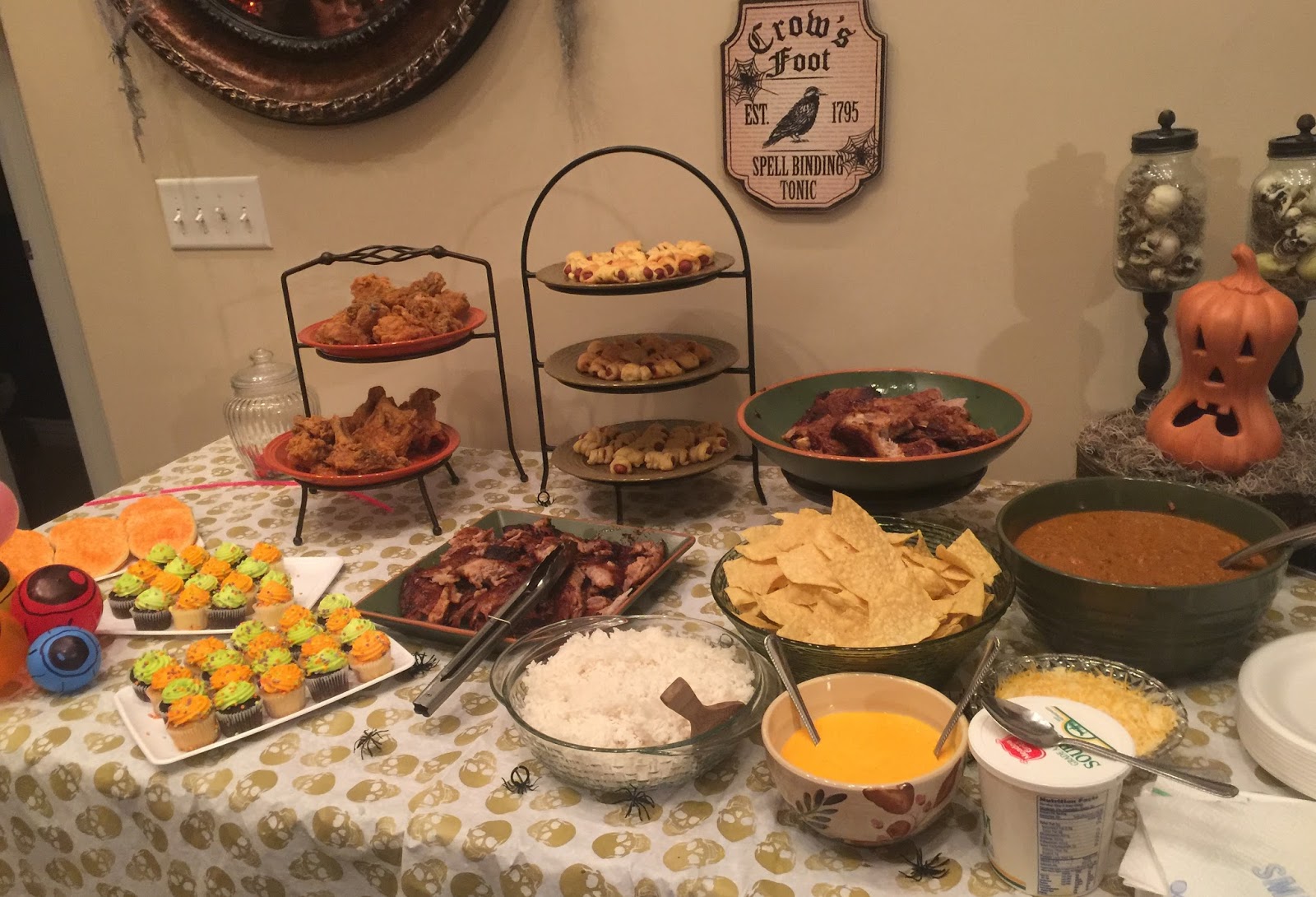
Some pics from our Halloween Party 2017


At a Different Function


pagi siamagi ...lol


Halloween 2017


my homemade costume ...lol!


10/14/17

Interesting Exchange on the Samoan Language

About a week ago, I was reading a news article in Samoa Planet about an overloaded truck that tipped/overturned, and had these excerpts:
They had been enroute to Falealili to deliver a cement load (uka simā) for a church construction project.
“I couldn’t control the vehicle. The load was just too heavy.”
“Ua ou fiu le mea e taofi le taavale. Ua mamafa kele lava le uka.”
The officers ... encouraged passing vehicles to move along, as many had slowed down, wanting a closer look (faikala) at the accident site.
As a native speaker of Samoan, I immediately noticed some deviations (re: underlined text) from some of the conventions, notably the mixture of the so-called “t” and “k” pronunciations in one comment.  Also odd was the use of the “k” method in an official printed document as in the words “uka” (vs. “uta”) and “faikala” (vs. “faitala”.)  I was curious as to whether the deviations had already become standard in Samoa, both in the vernacular and the printed word.  So I commented, and the rest of following dialogue ensued.

LV Letalu 
“Ua ou fiu le mea e taofi le taavale. Ua mamafa kele lava le uka.”

To a native speaker, this is funny – and awkward – Samoan speech/talk having to do with the so-called “t” and “k” pronunciations used in the same comment. It can be used as a classic example of such elements in the study of the Samoan language. I wonder if it’s reported or original speech, hence it’s reporter vs. speaker as who the real non-native speaker is. I also notice that the reporter prefers the “k” pronunciation in the two translations “uka simā” vs. “uta simā” and “faikala” vs. “faitala”. The lesson to be learned from this is the role of the media (newspapers, internet, radio, etc.) as the so-called standardizing agents for language. In other words, the more this mixed semantics is used, the more it gets normalized and standardized. Faafekai Tele! ????

Editor
Talofa Mr Letalu. The quotes you refer to are direct ones, ie it’s being cited exactly as the speaker said it to our reporter. Many of us ‘native Samoan speakers’ here in Samoa, use BOTH the ‘t’ and the ‘k’ pronounciation [sic] – often in the same sentence, and we can fluctuate between the two. (Especially in stressful moments.) We don’t correct direct quotes when we use them and prefer to have people sound/speak exactly as they are. We also don’t see a problem with our Samoan speakers using the ‘t’ and/or the ‘k’.

Faafetai tele,
Editor
Samoa Planet
_______________________________

LV Letalu
Talofa fo’i Editor:

Editor: Talofa Mr Letalu, The quotes you refer to are direct ones, ie it’s being cited exactly as the speaker said it to our reporter

Letalu: Thanks for the clarification on that part of my inquiry.

Editor: Many of us ‘native Samoan speakers’ here in Samoa, use BOTH the ‘t’ and the ‘k’ pronounciation [sic] – often in the same sentence, and we can fluctuate between the two.

Letalu: First of all, it’s not standard, hence not proper, to use both the “t” and “k” pronunciations especially in the same sentence, as claimed. The only time it’s considered proper to use the two together is when the “t” pronunciation is the main reference and you have “k” words which are loan/borrowed words such as “kālone” (gallon) “kopi” (copy) “kālena” (calendar) “kamupani” (company), etc. etc. E.g. Proper: “Na sau le tama e avatu le kālone a le kamupani.” Improper: “Na sau le kama e avatu le taloge a le kamupani.”

The improper version is an example of your “mixed” claim and a true native speaker would point that out, at least in the written/printed form, versus the vernacular. No offense intended, but this non-standard speech can often be found among the little children, and among those who are not well-versed in the Samoan language. Moreover, the mixed “t” and “k”, as you stated, is not taught in a formal classroom setting where Samoan is taught as a structured academic course. I’m glad however that you used quotes in your ‘native Samoan speakers’ designation, which can therefore be interpreted as an anomaly among true native speakers. That said, I understand that language is a social phenomenon and therefore it gradually changes and evolves. Notwithstanding its evolving aspect, a language still has basic consistent rules (syntax, semantics, morphology, grammar, etc.) at any given time and place.

Editor:
We also don’t see a problem with our Samoan speakers using the ‘t’ and/or the ‘k’.

Letalu:Yes, as long as the usage is intuitive and consistent with the established “rules”.
One last example: You wrote “Faafetai tele” which I’m sure was the more intuitive form as opposed to my “Faafekai Tele” which was given in jest and for the purpose of illustrating the point at issue.

Thanks for the dialogue.

Respectfully,
LV Letalu
_____________________________________

News Source/Editor
Talofa again Mr Letalu,

We appreciate your time and expertise shared here. While we are not academic language specialists like yourself, we can assure you of the following:

1. You are correct that the mixed ‘t’ and ‘k’ would not be taught in a formal classroom setting where Samoan is a structured academic course. Its obvious that is where you learned your Samoan and that is the pillar upon which your critique is founded. We salute your extensive knowledge and learning.

2. Sadly, Mr Maiava did not learn his Samoan in a structured academic course. His Samoan was learnt at the feet of his parents, aiga, village and lotu. Samoan is his first language. He was born here, grew up here and speaks Samoan every day, 7 days a week. Does that make him a ‘true native speaker’ of the language? Or does that make his language usage somewhat less worthy or ‘acceptable’ than a person who learns it and speaks it in a structured academic setting?

Experts such as yourself may not like his mixed vernacular, or his ‘break’ with your ‘consistent rules’, but the reality is, that this is how we are speaking Samoan everyday here in Samoa. Have you listened to a session of Parliament lately? Or the local radio stations? Or to the presentation of a sua at any number of ceremonial occasions being held every week here? Mr Maiava’s speech pattern is not unique. It is standard to ‘t’ and ‘k’ all over the place…

The tragedy is, how can you expect the poor man (or any of us here) to speak Samoan to your standards when we are surrounded every day by mixed use of the ‘t’ and ‘k’?! It’s a shocking decline of TRUE Samoan language standards. Clearly we need saving. Perhaps experts like yourself would consider moving here to teach us how to speak Samoan properly?

In the meantime, we trust you will find it in your heart to be more tolerant and understanding of those of us Samoans who don’t live up to your expert language proficiency standards.

Faafetai lava,
Editor

(Oh, and prefacing an offensive remark with “No offence but…” does not make it any less distasteful. It is indeed offensive and the epitome of arrogance, for anyone to assert that Mr Maiava’s speech patterns are those of a ‘little child’ or someone not versed in Samoan language.)
___________________________________

LV Letalu 

Talofa Editor/News Source!

First let me clear up a few things before I respond point for point to your post. Se’e ane i ou se’etaga se’i o’u liliu atu se’i fai se talanoaga.

Most of the things that I’ve advocated so far, notably the mechanics of the Samoan language (usage, grammar, semantics, etc.) are not things that I woke up last week and started fashioning and constructing on a whim. They are actually conventions specific to the Samoan language and have been for years. Linguists, newspapers/sources, schools, government, etc. espouse and adhere to them. They constitute the standards of the language.

The “t” and ‘k” pronunciations (and we have not even touched the “n” and “g” ones, respectively) are two distinct and often discrete manner of speaking and/or writing in Samoan. Strictly speaking (pun intended), the “t” pronunciation is often called “tautala lelei” (good/proper or formal speech). Apparently it is considered “lelei”(good), because it was introduced by the missionaries and churches along with the written alphabet. This “t” style/method is often used in formal settings (churches, schools, government, etc.) as well as the official written/printed convention. That’s why I was somewhat surprised to see “uka” (vs. “uta”) and “faikala” (vs. “faitala”) in the article.

The “k” style, on the other hand, is considered informal (not leaga (bad), per se, as it’s often labeled in opposition to the “good” “t” style). The “k” style – with the exception of loan/borrowed words (re: previous post) comprises the vernacular or everyday parlance. It is also the bona fide style for the chiefs in their traditional roles as faila̅uga (orators) and taulele’a (non-titleholders) in their respective roles during the ‘ava ceremony and sua (food gifts) announcements.

Therefore, when one attends church listening to a pastor’s sermon, and then immediately goes to a chiefs/orators’ meeting, he will notice the stark contrast and difference between the “t” and “k” (and “n” and “g”) pronunciations. This scenario represents the “mix” of the two in an acceptable sense and that can be found in the everyday lives of the people. And that is considered standard and normal. In the next levels below that (i.e. within a section, paragraph, sentence and word), the “mix” gets smeared and becomes non-standard. It starts to sound awkward and superficial.

In the examples below, notice how usage and overall integrity of the language diminish, especially in the mind and perspective of a native speaker, thus refuting your claim of the normalcy in the indiscriminate and haphazard use of the “t” and “k” pronunciations.

a. Paragraph (within): “Ua ou fiu le mea e taofi le taavale. Ua mamafa kele lava le uka.” (I tried my best to stop the car. The load was quite heavy.)
This is from the article. Let me say that if the speaker were a native one, he/she would have said all in the “k” style/vernacular like this:
“Ua ou fiu le mea e kaofi le ka’avale. Ua mamafa kele lava le uka.”
Now a truer native speaker (like me, ha!) would have said:
“Sole, ua ou fiu leaga e kaofi le kaavale, o le [ma]kuā mamafa lava o le uka.”

b. Sentence: “Sa tamo’e le kama e tau mai kipolo.” (The boy ran to pick lemons) Notice the mix in “tamo’e” “kama” “tau” “kipolo” which in the standard styles should either be all “t” or all “k” – not a mix.

c. Word: “Se ku’u le taukala so’o ae sau katou o e tokō tiapula.” (Hey, stop talking too much but come go with us to plant the taro shoots.)
Notice how awkward it sounds when the mix is within the individual words. “taukala” which should be “tautala” or “kaukala” and “katou” which should be “tatou” or “kakou”.

Again the exceptions can be found in loan words, at least in the “t” or the formal/written style. E.g. “ti'ākono” for deacon is standard while “ki'ākogo” is acceptable in the “k” style/method.
Other borrowed/loan words in the same pattern include “tekonolosi” (technology) “kitara”(guitar) “komepiuta”(computer).

Read some of the government documents (Samoan) on your website like speeches by the PM and you will find that there aren’t any “mixes” such as those above.

Editor:
We appreciate your time and expertise shared here. While we are not academic language specialists like yourself, we can assure you of the following:

Letalu:
First of all, I am not an “academic language specialist” or a linguist for that matter. In fact you don’t have to be either to know and understand most of the things we are discussing about the Samoan language. As a native speaker of Samoan, o le tele o lo’u mālamalama e uiga i le gagana, na maua ma tapu’e i lo’u ōlaga i totonu lava o lo’u nu’u ma lo’u āiga i Samoa. 
Or, if you prefer the “k” and “g” styles, o le kele o lo’u mālamalama e uiga i le gagaga, ga maua ma kapu’e i lo’u ōlaga i kokogu lava o lo’u gu’u ma lo’u āiga i Samoa.

Editor:
You are correct that the mixed ‘t’ and ‘k’ would not be taught in a formal classroom setting where Samoan is a structured academic course. Its obvious that is where you learned your Samoan and that is the pillar upon which your critique is founded. We salute your extensive knowledge and learning.

Letalu:
While you sarcastically and derisively salute my “extensive knowledge and learning,” you simultaneously malign the academia in its role in the study of languages. Let me remind you, since you’re openly ignorant of the fact that you are, if I may use the maxim, biting the hand that fed/feeds you. Being a Samoan (as in ethnicity) editor for a predominantly English website, you’d have to have taken some academic courses – at least in the language arts – to qualify for the position of an editor. Therefore, for you – again as an editor – to mockingly insult the “formal/structured classroom/academic setting” as the “pillar upon which my critique is founded” is feigned at best and hypocritical at worst. If you continue to advocate such viewpoint, then you may want to start protesting the NUS, and other institutions of higher learning in NZ and advising them about their shenanigans, and vain futile efforts of including the study of the Samoan language in their curricula.
By the way, today, we use the western (pa̅lagi) academia methods and approach in the analysis and study of languages. Vēape (verb), nauna (noun) soā nauna (pronoun), etc., are English concepts. And so to fully understand the mechanics, functions and relationships of the Samoan language we use the pālagi rules and methodologies.

Editor:
Sadly, Mr Maiava did not learn his Samoan in a structured academic course. His Samoan was learnt at the feet of his parents, aiga, village and lotu. Samoan is his first language. He was born here, grew up here and speaks Samoan every day, 7 days a week. Does that make him a ‘true native speaker’ of the language? Or does that make his language usage somewhat less worthy or ‘acceptable’ than a person who learns it and speaks it in a structured academic setting?

Letalu:
That, I must say, is a very poorly constructed thought and logic. It’s anemic, to say the least.
FACT: Being born in Samoa, learning Samoan at the feet of parents, āiga, village, lotu, etc., etc., etc., DO NOT necessarily make one a “true native speaker.” Why? Because it all depends on the “type” of Samoan that is being taught and transmitted.
Case in point: When I was growing up, and went to school at Leifiifi Intermediate (way back then ..lol) and then to Samoa College, there were a lot of kids/students, especially of the half-caste upbringing, who spoke mostly English and little, if any, Samoan. Some of my own cousins who were born and raised in Apia demonstrated the same trend. Most, if not all, of these students had parents, āiga, neighbors who spoke very little Samoan. They even attended churches which used primarily English. In fact I can name a lot of afakasi (halfcaste) families in town whose children fit all your above qualifications and still in the end fall short of being true native speakers, because Samoan was not their first language; English, or pidgin was. And yet they were born, raised and lived in Samoa all their lives.
Moreover, this is not limited to only the children, there are adults who have acquired the Samoan language handicap since their childhood years because of their limited exposure to the language or their reluctance to learn or speak it. I can guarantee you that not much has changed in the above example, even today. Maybe you will thank this exchange and debate that you have learned something about some important social principles and fundamentals.

Editor:
Experts such as yourself may not like his mixed vernacular, or his ‘break’ with your ‘consistent rules’, but the reality is, that this is how we are speaking Samoan everyday here in Samoa. Have you listened to a session of Parliament lately? Or the local radio stations? Or to the presentation of a sua at any number of ceremonial occasions being held every week here? Mr Maiava’s speech pattern is not unique. It is standard to ‘t’ and ‘k’ all over the place…

Letalu:
Have I listened to a session of Parliament? I have listened to the ones of the bygone years and I doubt the changes, if any, are as dramatic as you are trying to make them out to be. But if true, then I would be expecting something like this in a typical session:

“Se e faaku’iese lo’u magatu i le sui lea mai le Itukolu o Sagana ma le Faleogo o Leakinana. O le makaupu e uiga i le lisi o fanua kau Samoa, e matuā le fekaui a ma lo’u manaku…” Hahaaa…

Is that how they “mix it up” now in Parliament? If there is a sui (representative) who speaks like that now, then he/she needs to undergo speech therapy.

And on a local radio station, something like this?
“Ia faakalofa atu i le ‘au faafofona i lenei ikulā o le taeao…”

Or during the folafolaga o le sua (sua announcement), which is by default uses the “k” style. Then maybe something like this is kosher (pun intended)?
“Fāliu ia alo o le lupe a’o se silafaga maualuga i lau tofā a le Kuiatua Faanofogofo, se maimoa i le Falefia o Alii Amituaga’i ma i la’ua Suafa, taigage le mamalu i ko’oko’o (or ko’oto’o) …” Huh?

So, such a mixed speech pattern is not unique? And that represents the norm now? Because that’s exactly what you mean by mixed vernacular being standard “all over the place”. What you’re suggesting is there are no more set patterns for Samoan speech, in the vernacular, at least. If that’s the case, then I am not surprised at some major efforts – in Samoa and NZ – to teach, revive and revitalize the Samoan language in a “structured academic setting.” Moreover, you’re implying that I have been away for too long from Samoa, hence my seeming disconnect. Honestly, there is no disconnect.

Editor:
The tragedy is, how can you expect the poor man (or any of us here) to speak Samoan to your standards when we are surrounded every day by mixed use of the ‘t’ and ‘k’?! It’s a shocking decline of TRUE Samoan language standards. Clearly we need saving. Perhaps experts like yourself would consider moving here to teach us how to speak Samoan properly?

Letalu:
Do I detect a capitulation or a surrender of some sort in your comments? They (comments) are certainly not tongue-in-cheek, are they? Based on the assumption that what you said (excepting the last sarcastic sentence) is serious, then I’m interpreting your declaration that the mixed use of the “t” and “k” styles as a “shocking decline of TRUE Samoan language standards….[and] we need saving,” to be genuine. If so, then you and I agree that the “t” and “k” mix is actually an aberration, a deviation from the standard, as I said, and not the norm as you have argued.

Editor:
In the meantime, we trust you will find it in your heart to be more tolerant and understanding of those of us Samoans who don’t live up to your expert language proficiency standards.

Letalu:
I was not intolerant, instead I was just pointing out an anomaly, to which you have obviously agreed, and therefore to my “expert language proficiency standards.”

Editor:
(Oh, and prefacing an offensive remark with “No offence but…” does not make it any less distasteful. It is indeed offensive and the epitome of arrogance, for anyone to assert that Mr Maiava’s speech patterns are those of a ‘little child’ or someone not versed in Samoan language.)

Letalu:
I hope you, Editor, will be honest in disclosing where you were born and raised – kuā vs. Apia. I was born, raised and lived in one of the most rural villages you can find and little children’s speech in these areas consist of a “mix” (of the “t” and “k”) and everything else. It is very unintelligible. Again if you were not born, raised and lived in a rural village then you have missed what I was/am saying. And that’s why I had to insert a pardon as preface, because I know it can be offensive IF not interpreted correctly and IF the facts are not known or understood. Ae faamalie atu i le susuga ia Maiava (talu ai o lena e te sui momo’e Editor) pe afai ua le tau tamāli’i se upu, ia mālū̄ fo’i ‘ave i fale i le finagalo, ae o la lava na sa’olele le tuuina atu o se manatu.

That’s it for now, aye?

Faafetai,
LV Letalu

10/3/17

General Conference Quotes

This past weekend was the General Conference (Semi-Annual) of our Church - The Church of Jesus Christ of Latter-day Saints, aka LDS Church or The Mormon Church.  General Conference is held twice a year, in April and October - on the first week.  The main assembly hall (Conference Center) is in Salt Lake City, Utah, but the conferences are broadcast to chapels and centers around the world on radio, satellite, television, cable, internet, etc.

Here are some of the quotes I've selected from some of the talks/sermons of the conference.  I've translated each one in Samoan.

Conference Center with "green" roof
Differences vs. Commonalities
"As we enter a chapel or a temple to worship as a group, we should leave behind our differences, including race, social status, political preferences, academic and professional achievements and instead concentrate on our common spiritual objectives." ~ Elder Joni Koch

Pe a tatou ulufale i se falelotu poo se malumalu sā e tapua’i o se vaega, e ao ona tatou lafoa'i o tatou ‘ese’esega, e aofia ai ituaiga ma lanu, tulaga poo mamalu, talitonuga faa-faigamalo, o faailoga fa’ale-a’oa’oga ma tomai faapitoa, ae ao ona tatou taula’i atu i o tatou faamoemoega ‘autasi faale-agaga.

On Scriptures
"The scriptures remain reliable sources of truth. From those thin pages thick with spiritual insights, we learn truth through the Holy Ghost and thereby increase in light." ~ Ian S. Arden

O tusitusiga pa’ia ua tumau pea o ni puna faatuatuaina o le upu moni.  Mai i na itulau manifinifi, ua mafiafia i malamalama loloto faale-agaga, tatou te a’oa’oina ai le upu moni e ala i le Agaga Pa’ia ma faatupuina atili ai lo tatou malamalama.
Conference Center - view from bottom level

On Faith and Fear
"The Lord has taught me that discouragement and fear are tools of the adversary. The Lord's answer to hard times is to go forward with faith."
~ Elder Stanley G. Ellis

Na a'oa'o mai e le Ali'i ia te a'u o le loto vaivai ma le fefe, o ni faatufūgaga a le fili.  O le tali a le Ali'i mo taimi o faigatā, o le aga'i pea i luma ma le faatuatua.

On the Book of Mormon
[A member of the Church apostatized and came back and wrote a letter saying]:
"Initially, I wanted the Book of Mormon to be proven to me historically, geographically, linguistically and culturally. But when I changed my focus to what it teaches about the gospel of Jesus Christ and His saving mission, I began to gain a testimony of its truthfulness." ~Tad R. Callister

[O se tasi na liliu ‘ese mai i le Ekalesia, ma toe fo’i mai, na ia tusia sana tala faapea]:
I le taimi muamua, na ‘ou mana’o ina ia faamaonia mai ia te a’u le Tusi a Mamona i luga o ni fa’avae faa-talafaasolopito, ele’ele ma laufanua patino, faale-gagana faapea tu ma agaifanua [a tagata o lo’o ta’ua i le tusi].  Peita’i ina ua suia la’u tāutū, ma taula’i la’u va’ai i mea o lo’o a’oa’o mai e le tusi e uiga i le tala lelei a Iesu Keriso ma Lana misiona lavea’i, na amata loa ona ou mauaina se molimau o lona moni atoatoa.

On Journeys and Destinations
“Many of us are on amazing journeys of discovery — leading to personal fulfillment and spiritual enlightenment, some of us, however, are on a trek that leads to sorrow, sin, anguish and despair.”~Elder M. Russell Ballard.

O le to’atele o nisi o i tatou o lo’o i ni faigamalaga maoa’e o le sa’ili malo - e tau atu i ‘ausiaga lelei ta’ito’atasi ma le atamai faale-agaga; peita’i o nisi o i tatou o lo’o i se sāvaliga e tau atu i le faanoanoa, agasala, puapuaga ma le aunoa o se faamoemoe.


Inside Conference Center - view from topmost level
On Superiority
"Anyone who claims superiority under the Father’s plan because of characteristics like race, sex, nationality, language, or economic circumstances,is morally wrong and does not understand the Lord’s true purpose for all of our Father’s children." ~ Elder Quentin L. Cook

So'o se tasi, i lalo o le fuafuaga a le Tama [i le Lagi], e faia se ta’utinoga faapea e sili atu o ia nai lo isi tagata, ona o totinoga e iai itūaiga tagata ma lanu, tane poo le fafine, atunu’u, gagana poo tulaga tau i le tamāoāiga, ua faia e ia se amioga sesē, ma ua na le mālamalama i le faamoemoega moni a le Ali’i mo fanau uma a lo tatou Tama [i le Lagi].

On Choices
“We are blessed not because of our abilities but because of our choices.”
~ Pres. Dieter Uchtdorf

Tatou te manuia, e lē ona oni o tatou agava’a ma tomai, ae ona o ā tatou filifiliga.


General Conference attendees

9/20/17

Memories in Pictures: Of Past and Present


PRESENT:        "homefront" - warm summer evening


PAST:         our young family

PRESENT:      good and fun times ...


PRESENT:      beach fun, history repeating itself (re: next pic)

PAST:    also had beach fun back then in hamoland ...lol!!!

PRESENT:       beach/lake fun and picnic


PRESENT:        cruisin' in usaland style


PAST:         as a young husband/dad with first child, ready to go cruisin' hamo style :)

PRESENT:   now an older dad ...  "dad bod" or not? ...hahaaa

PAST:      She

PRESENT:        He


PAST:    my hamo girlfriend ...lol!!

PRESENT:    her hamo boyfriend ..lol!

PAST:  ... her, with our first child


PRESENT:     "homefront"  cool summer night