The Purcell Family Reunion craze of recent years continued this past month in Samoa in the village of Malaela of the Aleipata district. Malaela is home to the Aiga Purcell. It is their
faasinomaga (allotment) and
tupu’aga (inheritance). The reunion started on August 1st until the 4th.
 |
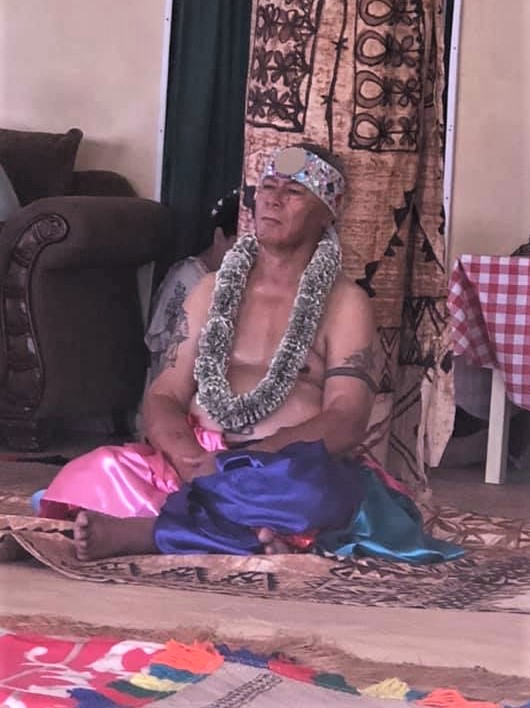
| Afioga Lesāmatāuānu'u |
The reunion was also preceded and heralded by the
faafotutupu or
saofa’i (chiefly title bestowment) for the
Sa’o (principal chief) of the Purcell family with the title Lesāmatāuānu’u. The heir and successor was Sa’ili Alapati Ropati Purcell, a grandson of the first and original holder of the Lesāmatāuānu’u title.
 |
| ... some members of the Samoa group |
This reunion was special because it was IN Samoa - the Motherland! It could therefore fittingly be referred to as the “mother” of all reunions for that very reason aaand for several other reasons as well. Though not as big, festive and rollicking as the previous ones in the US, this one generated its own style, identity and flair. And though the attendees were fewer in numbers, the camaraderie, rapport, harmony and love of family and village were deeply felt and shared. (If Trump were to describe it he would say that the reunion was “incredible, amazing, bigly, fabulous, unbelievable and it was the likes of which [Samoa] has ever seen. Believe me!... Covfefe (Kafefe!)🤣)
 |
...we had not one but two drones
providing "heavenly" perspective |
Some of the best experiences of the reunion were had by those family members, especially children and others who had “come home” to Samoa for the very first time. Their memories have been treasured and shared through comments, posts, videos and pictures especially on social media. They now speak with fondness, admiration and great love for the place they had only heard about through stories and memories of their parents and grandparents. Now, they had finally “come home.”
E le galo atu lava!
 |
| ...drone operator |
For us the returnees, it was a time of recollection and nostalgia. There were a lot of places that held indelible memories growing up such as schools, churches, stores but mostly the
aiga ma le nu’u (family and village). And of course, for some, the memories of what the lyrics of a local favorite describe as “[where] I met my first love....” are always the best ever!
 |
| ...reunion t-shirt |
For me also, the drive from Aleipata to town (Apia) was filled with memories of those long ago (seemingly at least) early morning drives of two hours or more. One day, during this visit, I timed the same drive from town back to the village and I made it in 45 minutes!! Mind you, there was a 15 minute stop at Sulā for some
kekepua’a. Driving on the
wrong left side of the road slowed me down a bit, as well as ... well you may have guessed it ... the potholes. They’re still there like an old village curmudgeon that refuses to
expire die. But the potholes seem worse now with the paved roads; they’re deeper and more dramatic (for the lack of a better word). All in all, however, Samoa still grants me my so-called “sense of place.”
O le tagata ma lona faasinomaga!
 😂 😂 |
| ...that perfect place/spot for the gathering |
The five-day gathering was filled with fun, celebration, joviality and spirituality.
The countries involved were divided into regions with each region being asked to provide and/or present a repertoire of songs, dances, etc. There was a total of five regions.
The first day was taken up by the
feiloa’iga (meeting and greeting) and introduction of those who had already arrived from as far away as England, US, Australia, New Zealand and as close by as American Samoa. American Samoa is literally only a few miles away, considering the location of Malaela on the eastern-most tip of Upolu (Samoa’s second largest and main island). In fact on a clear day, the outline of American Samoa can be seen over the horizon from Malaela; it’s that close. The leaders of the contingent from American Samoa were also assigned to be responsible for the reunion planning and logistics. The reunion t-shirts were also distributed to those who had not received them on this first day. By then, two large party tents had already been set up on a reclaimed area (40x30 yards) just off the shoreline of the Sa’o’s residence. This location, together with the tents, could not have been more suitable and strategic for the purposes and proceedings of the reunion.
 |
| ...mr DJ ..gotta have musikaaaa!! |
This perfect spot had not only a clear view of the Namu’a island which served as a beautiful backdrop (for pictures and scenery), but it was also right up against the incoming tide and low rippling waves as they lap and crash gently against the rocks. The sounds of the ocean were refreshing and relaxing and the blue waters made for an ideal background enhancing the perfect island setting for the reunion. The gentle breeze, blowing continuously both day and night, served as a natural air condition. For those of us from overseas who had been warned and made to feel threatened by the heat and humidity in Samoa, the breeze and the gentle light winds calmed and soothed our bodies - and our fears of the heat. Interestingly, this coastal stretch of the Aleipata district is known as the
Matāmatagi (literally “eye of the winds”) so it actually lived up to its name, at least during the entire duration of the reunion. The breeze had energizing and lulling effects and both - at certain timely moments -were needed throughout the busy and exciting gathering.
Seki a le savili!
 |
...turtle hitching a boat ride
-this was no ninja turtle |
On the second day (Friday) there was Zumba in the morning followed by a Samoan breakfast, which was a favorite of many from overseas. This was also the day that was originally planned for a Savai’i excursion but was changed due to an unfavorable weather forecast. So the family opted to go to Namu’a instead.
Two boats (with outboard motors) helped take the family to and from the island. The Namu’a excursion turned out to be a lot more exciting and a pleasant leisure. The pristine blue waters and the white sandy beach and the
fales proved relaxing and refreshing to young and old. The water was so warm that it was like being wrapped and cuddled with several mink blankets in the middle of winter in Utah ...hahaaa...
As the boats transported the family to and from the island, turtles swam along the sides of the boats as if they were escorting the family. One of the crew boys managed to lift one from the water and placed it on the boat briefly, and then was released.
Laumei faiaga ....!!
For the better part of the third day (Saturday) the family gathered at the beach in Lalomanu for a picnic, games, barbecue and swimming. It was yet another perfect day at the beach. There was something for everyone to do and enjoy. The children, as always, could not resist the shallow warm water and the soft spongy sand that they would prefer for their backyard sandboxes. Inflated floating rings were handed out to them, compliments of the American Samoa group.
Faafetai AS! The young adults from overseas played games on the beach and tried any chance to get a tan the natural way. '
Aua le ova le tan a kakou! Others, especially the locals, who felt that the beach and the sun, to them, were overrated and overly familiar, stayed in the shade (with their bred contempt 😜) all hooked on their phones as though the gadgets could be confiscated at any moment by the phone police; or they all may have been quite excited to take advantage of a group discount on recharged credits.😑
 |
| ... locals, hooked on phonics ...oi, phones |
Meanwhile the older folks resigned to just sitting in the beach
fales chatting and listening to their local favorites played on a Bluetooth speaker. (Technology has definitely changed lives, yessss, even of those in Samoa.)
When I was growing up, if we (me and friends or siblings) wanted to listen to any songs while doing any work (that's right,
work, not at the beach...believe me!) around the house or at the plantation, we had to have been the more fortunate ones to have owned a cassette player with fresh/new D batteries and the cassettes. That was then. Now you can take a picture, listen to music, watch a movie, go live during a reunion etc. etc. on a phone. Wow, am I old or what? Well at least I’ve spanned these “eras” and I can therefore see the changes and have a sense of appreciation for the past and the present.
 |
| ... the view, the spot, the tents and Namu'a |
At late afternoon the beach picnic ended in order to get ready for the dance in the evening. Dance!
Siva! Siva! Siva! was/is how they advertise a dance in Samoa. Although the dance was supposed to have been in the chapel (stake center), a last minute change moved it back to our COOL tents. It turned out that the dance was many times funner than had we had it in the chapel. It was a lot more casual now even with the boogie woogie woogie and the rock 'n roll. In the tents, the breeze wafted and kept us (hmm...what’s the word again?) ....Cooool!... or Coolio!.. while dancing the night away. The sounds of the waves gently pounding the rocks seemed to have silently added and augmented the beat of the DJ's bombastic bass blasts. Some passersby joined the dancing and strayed off into kooky territory, drawing attention and laughter but it was good clean controlled fun. It was like everything came together and worked to our benefit and enjoyment. We definitely got the beat that night. And we also beat the heat .. uhhh in more ways than one (wink! wink!). Dancing under the sprawling Samoan night sky with the ocean cheering on, hissing and kissing the rocks ... as we rocked ‘n rolled. Yep, a few of us actually rolled on the ground...and for the rest, we just rolled (as in “that’s how we roll!”) - simply, had FUN. You could not dream up a more memorable, enchanting and romantic (for some of us) setting for a dance -- only in a village on an island. And that village was Malaela, and the island was Samoa.
O le a ou fo'i i Samoa, motu o pesepesega!
 |
| ...beautiful Sunday |
Sunday was the day that most of us from overseas looked forward to for several reasons. It’s a day that holds a lot of memories of Samoa. Things like the
fa’apusa (early oven cooking), the church bells and everyone dressed in white going to church. So although some of us were not involved with the Sunday cooking, most of us attended church. It's one of those things that hasn’t changed much - if at all.
The one thing, however, that makes up a lot of Sunday anecdotes for those from outside Samoa, is the
to’ana’i/to’ona’i (Sunday brunch). Although it’s the food that makes the
to’ana’i memorable, it also has a lot to do with the sociability that comes with it. The
to’ana’i is also observed outside Samoa, but no matter how much food in all its ambrosial varieties is served in other countries, the genuine
to’ana’i still belongs in Samoa. Everything about the
to’ana’i in Samoa (sight, etiquette, smell, taste, etc.,) contributes to its unique role in the Sunday and feasting traditions of the people. This was the case with the family
to’ana’i on this Sunday. Everyone enjoyed the food while chatting, giggling, laughing and just enjoying quality family time. But, again, the
to’ana’i is still about the food. Put simply, good food equals good mood.
And, personally, Samoa is where the good food is found.
 |
...a little pig for a big to'ana'i appetite
there were a few of these |
Faafetai le a’ao malosi!
 |
| ... before the to'ana'i |
Traditionally - and naturally - after the
to’ana’i comes the nap. Everyone is full. Like me (re: picture).
Ma’oga loa, koso loa ma le fala ae fai le moe lakou ...hahaaa. Actually it was nature’s lullabies (breeze, ocean, mat, etc) that lulled me to sleep. (Yea riiight!) Either that or, like most Samoans, I took literally the belief that Sunday is the “day of rest”. That was it but not from the gula (gluttony). After indulging in the blessings of delicious island cuisine, I then indulged in nature's blessings of the sea breezes and comforts of the friendly and entrancing ocean. Incidentally, if you commit the “sin” of gluttony from the Sunday ko’aga’i, would you be forgiven through obeying the commandment to then rest
immediately after?...Hahahaa. Ok, enough digressing.
 |
| ... the to'ana'i |
Later in the evening, the family had a fireside (spiritual service). Each region was assigned to sing one spiritual song and a speaker to give some spiritual thoughts. Since the chapel was off limits, we had the service in the tents which was not only advantageous but also symbolic considering the broader and historic context of the tents especially in the scriptures.
And since reunions often entail recalling the past, this tent setting meant more than a simple and convenient contingency.
 |
... after the to'ana'i 😜
(paparazzi file) |
We can recall the Old Testament patriarchs and the Israelites (as a family) who dwelt, gathered and worshiped in tents - most importantly in “the tent” (the portable tabernacle). So our worship service in the tents was not only symbolic but also productive in its goals to uplift, edify, inspire and to appeal to our nobler spiritual side. And of course after the spiritual food, came the more tangible and delicious native treats and refreshments. Sunday turned out to be everything we had expected - and more.
Mālō le Faatuatua ma le Faamoemoe. Mālō fo'i le moe!
|
|
...just a few of the members of Region I group comprised
mostly of those from Utah, USA |
Monday was the so-called
“toe aso” (final day) not in Moamoa, as the native expression goes, but in Malaela. This was the
“fiafia” day for the cultural performances of dances and songs. But to make it more fun and competitive, two groups were formed, yet would still maintain our regional groups during the cultural part. The two groups came together to open the day’s activities with a march/parade through the street in Malaela.
Donned in matching
lavalavas and reunion
t-shirts, the family marched and sang. The minimal traffic added to the unity and continuity of the parade which, at certain scenic and important points along the way, stopped for photo ops. One of these places was right in front of the chapel of The Church of Jesus Christ of Latter-day Saints, Malaela's (hence Purcell's) flagship religion.
Following the parade, everyone gathered back at the tents and had all different types of contests, games, competitions and dancing before the final cultural performances by each region. Despite the fact that Samoan songs and dances were the shared theme in these performances, each group brought something extra and different to the floor including dances and songs from other countries and genres. Each region as well performed a
taualuga (finale) and as usual, donated money to supplement it. The thousands that was collected in the final tally was originally offered to the Sa’o’s family members who were tasked with much of the cooking, serving and feeding of the reunion, but they declined and instead offered the money as a donation to the Missionary Fund.
Faafetai, o lau pule lea!
 |
Region I taupou, Cherish, with
Mom in background |
And so it was, and as the saying goes, every good thing comes to an end. Final goodbyes and sweet sorrows of parting started. Tears flowed freely as each one silently asked in their minds “Why did it have to end so soon?” “Is it really over? Why?” “Can we not tarry a little longer?”
 |
... bossy and fearless wahine
(yay, we DID it!) |
Well that evening some actually tarried a little longer singing, chatting, laughing and reminiscing.
The reunion was an experience of a lifetime, to be remembered and cherished always. Memories of friends, village, country and of AIGA.
E o a'u o le Samoa!
And in a span of a few days, Malaela, and Samoa, have left lasting impressions and impact on everyone who came. Very much so that they now are talking about 2021 for a repeat. What?....Already? Says who? Says some "bossy" and fearless wahine 😓😆...
Ok then....
to be continued................
(Note: I may post more pictures of the reunion)
Samoa Observer Story
A Special Tribute:
My mother-in-law (Dearie’s Mom) passed away a few days before our trip to Samoa for the reunion. She attended all the reunions in St. George and Las Vegas, especially as the eldest of the Purcell Aiga. Rest in Love Mama. You have a better heavenly reunion with your sweetheart 💕💕
 |
| ...dancing to close the 2015 reunion in St. George, Utah |
 |
| ...with some of her aiga at the Vegas reunion 2018 |
 |
| ..lunch break during Vegas reunion |




 😂
😂